
The School of Play
Loading your next play…
The School of Play
Loading your next play…
Half your class forgot yesterday's lesson. It's not your fault. It's biology. Here's the research on why movement is the most underrated learning tool in any classroom, plus one game you can run tomorrow.
Have you ever delivered what felt like a great lesson, only to realise half the class remembered very little of it the next day? You planned well. You explained it clearly. You even had a good discussion. And then, nothing. Gone.
For generations, classrooms have associated learning with sitting still. It made logistical sense. But research consistently shows something different: movement enhances attention, memory, and executive function. Not as an add-on. Not as a brain break. As a fundamental part of how human brains actually encode information.
Perhaps that's why so many students seem to understand a concept more deeply when they experience it physically rather than simply hearing about it. The body isn't separate from the brain. It's part of the learning system.
By Friday afternoon, kids have spent an entire week making decisions, solving problems, following routines, and sustaining attention. Cognitive fatigue is real, and it's one reason why even well-planned lessons are harder to deliver at the end of the week. Disengaged students aren't being difficult. They're running out of fuel.
Movement and novelty are especially important in these moments, not because they're fun distractions, but because they're literally what the brain needs to re-engage. The solution isn't more pressure. It's a better understanding of what students need in that moment.
Read: Friday Afternoon Teaching (Why It's Hard and What Works)Our bodies were never meant to sit still all day. Sustained sitting reduces blood flow to the brain and lowers attention, and the result shows up as fidgeting, zoning out, and low-level behaviour that usually gets treated as a classroom problem when it's actually biology asking for movement.
Knee Tag is a two-minute reset that fixes this. Here's how it works:
The game works because it demands constant micro-adjustments in balance and reaction time, re-engaging the brain's attention systems. No equipment needed. No setup. No explanation longer than 30 seconds.
When students arrive with different moods and energy levels, it directly affects participation. Most classroom systems still assume students can simply 'switch on' when the lesson begins. That gap between emotional state and learning expectation is where disengagement builds.
The Better Us Project is designed to close that gap through small, consistent moments that sit inside the school day, not on top of it. Daily check-ins, simple reflection prompts, and quick action-based responses help students name what's going on internally and do something with it immediately.
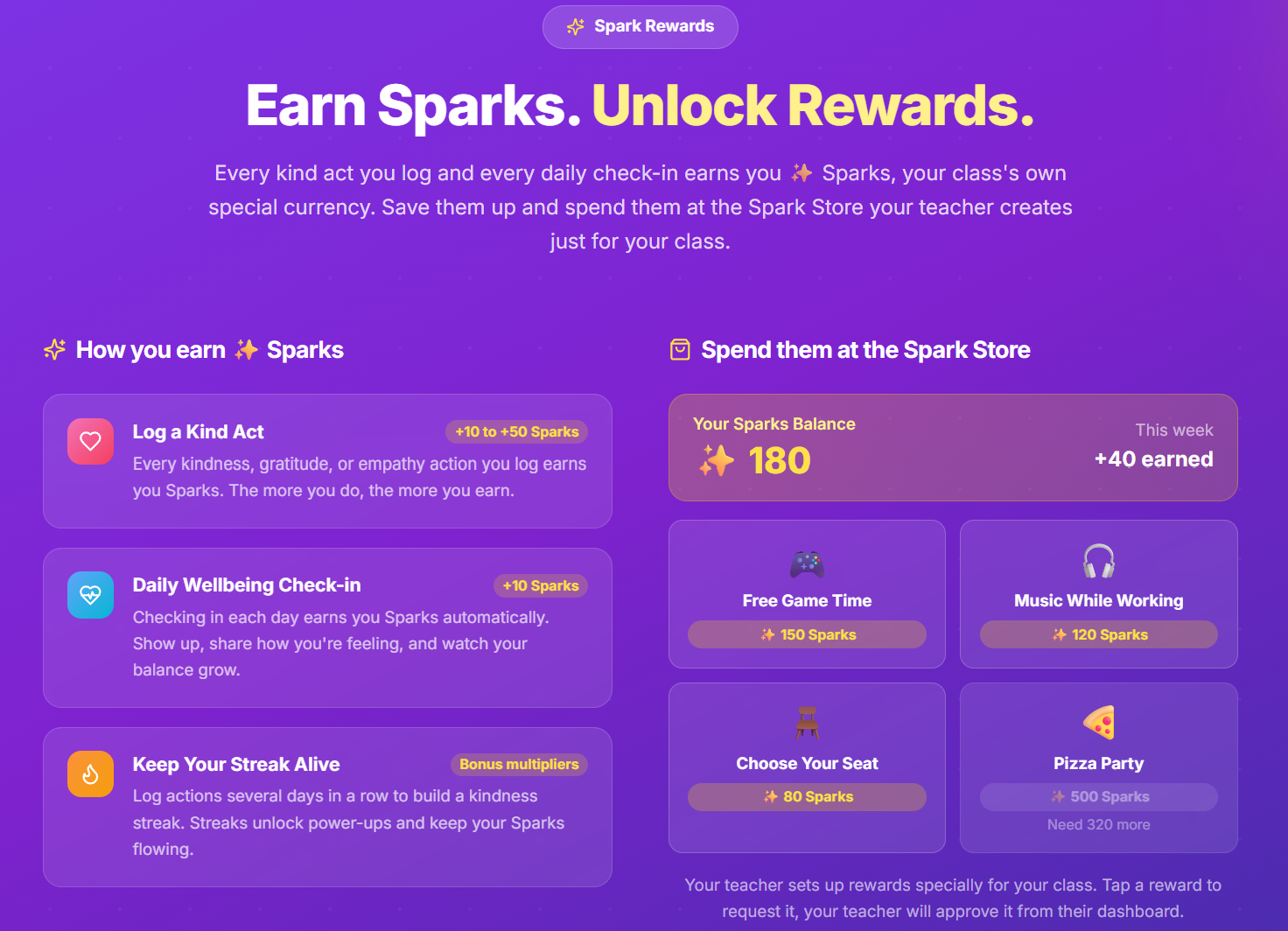
Instead of waiting for behaviour to escalate, students are supported to notice and shift their state early. It turns emotional variability from a classroom disruption into part of the learning process itself.
Start a free 14-day trial of the Better Us ProjectYou've seen it: students who are technically present, technically seated, technically learning. But the energy has dipped. What's missing isn't better content. It's smarter movement.
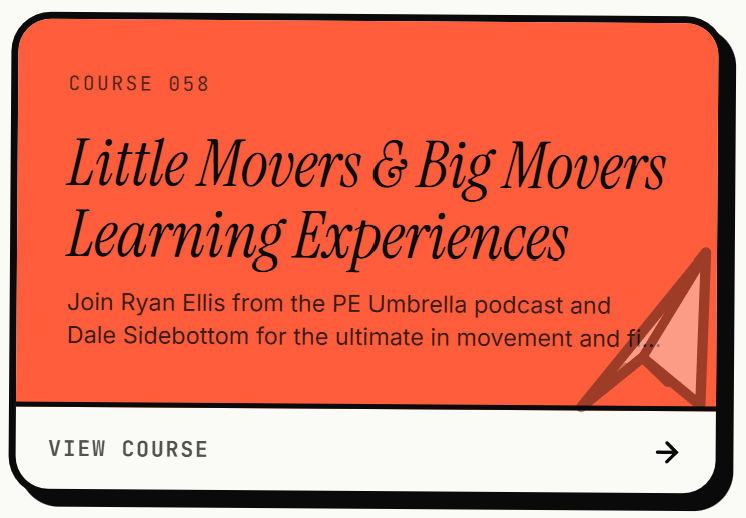
The Little Movers & Big Movers Learning Experiences course explores exactly this: how structured movement games can be used as quick resets across the day. Not just in PE. In classrooms, at home, anywhere attention needs to be rebuilt. Ryan Ellis from the PE Umbrella podcast shares practical ways to shift energy states fast, without losing learning flow.
These aren't complex setups or extra lessons. Just short, repeatable movement bursts that bring students back into their bodies so their thinking can switch back on.
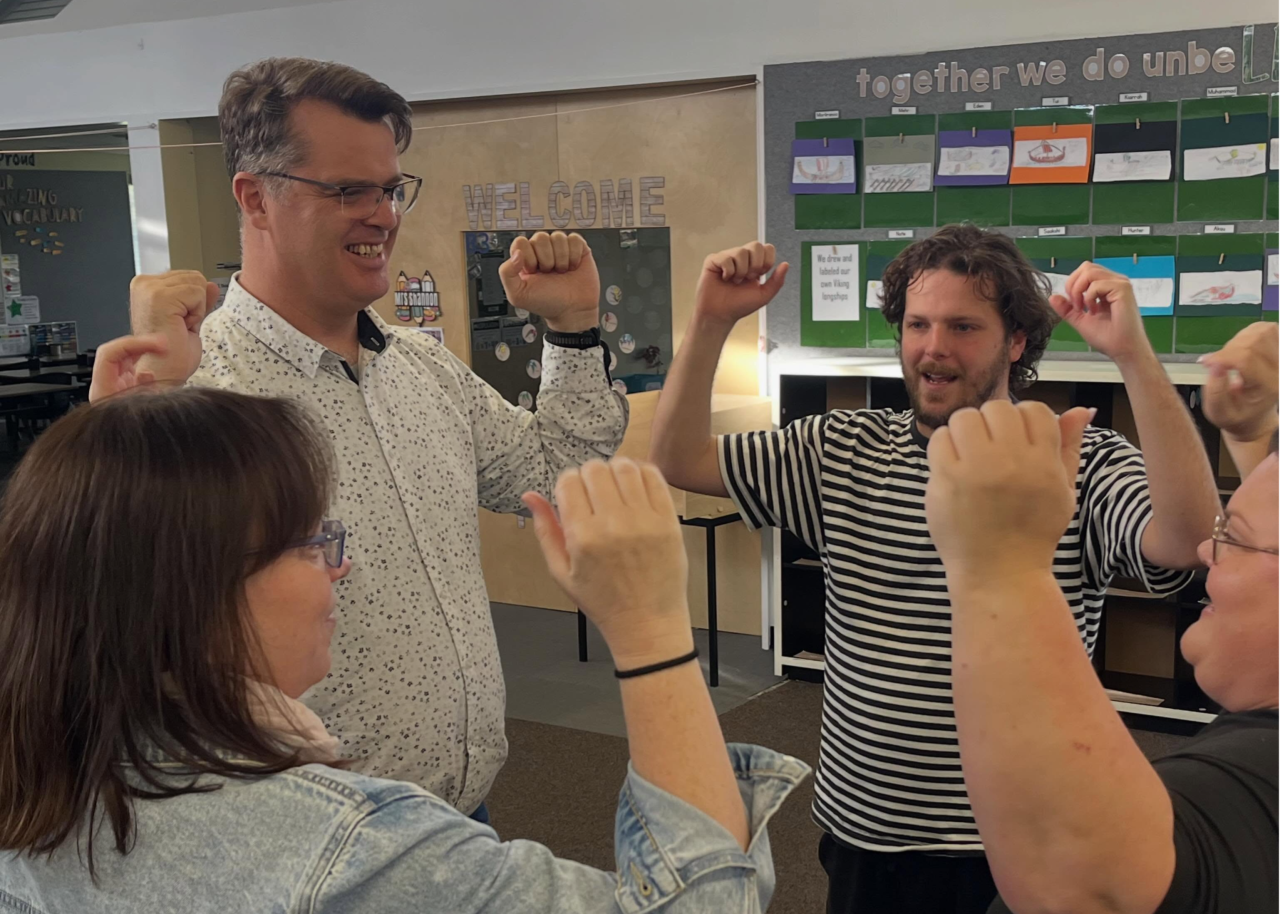
Access Little Movers & Big Movers on ClassBreakLast week marked the fifth and final staff workshop with the incredible team at Cranbourne Primary School. Over five sessions, Paul had the privilege of working alongside this group with one clear intention from the beginning: strengthen connection, deepen culture, and help build an environment where staff know they matter.
Because often, it's not the building or the job that makes a school special. It's the people inside it.

The final two-hour session had everything: laughter, emotional moments, honest reflections, and plenty of shared appreciation. To the staff at Cranbourne Primary School: thank you for your trust and heart throughout this journey.
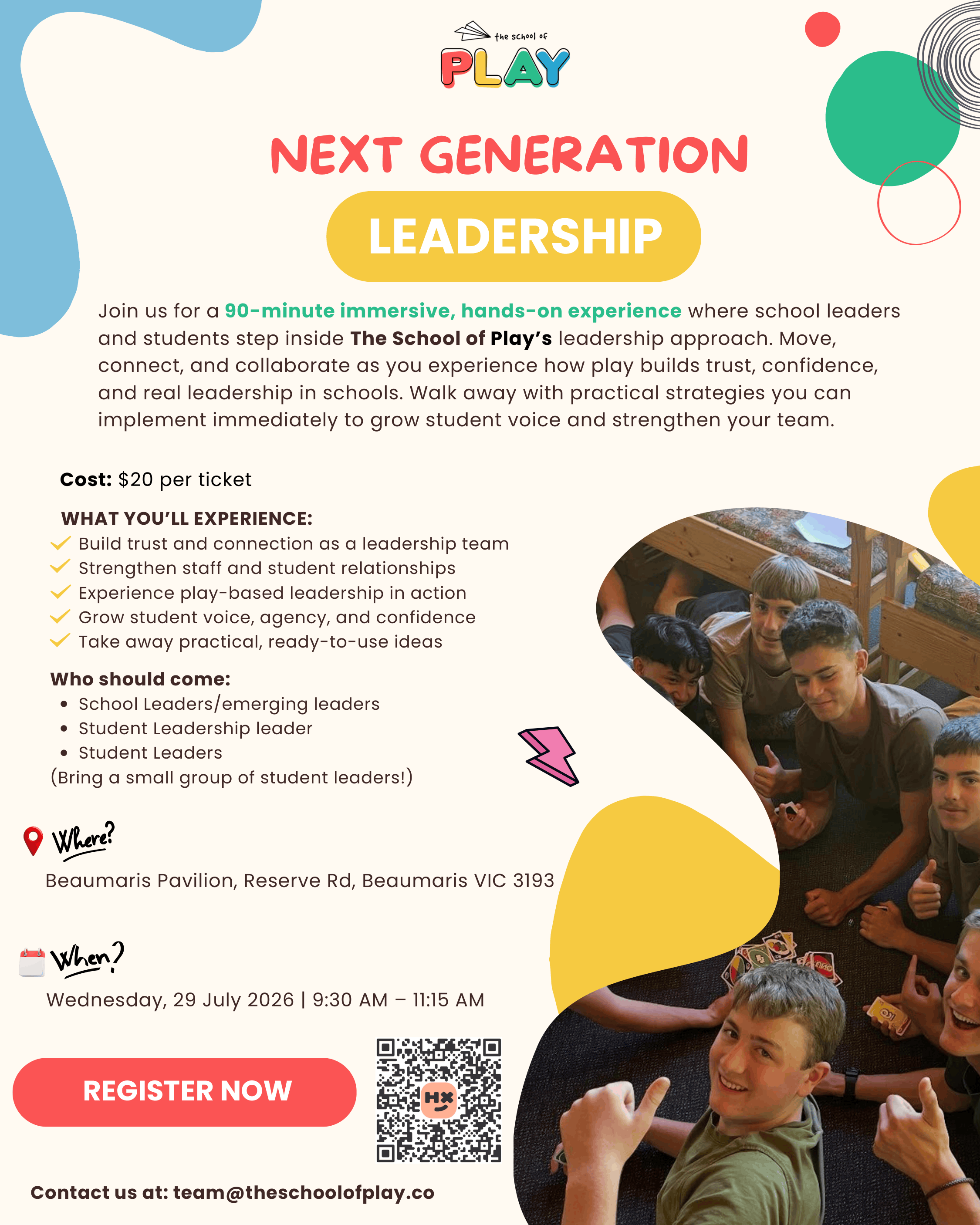
If you want to see what active participation looks like in a leadership context, the Next Generation Leadership Experience is coming to Beaumaris Pavilion on Wednesday 29 July 2026. Students don't sit and learn about leadership. They move through real situations that require communication, adaptability, and contribution in real time.
And if you want to bring The School of Play to your school or community, we'd love to hear from you.
Get in touch with our teamTake care, and keep building spaces people want to belong to. — Dale & Paul, The School of Play 🎉
A printable 2-page summary with the key takeaways. Perfect for staffroom walls, fridge doors, or the back of a planner.
What the data actually said, what we didn't measure, and why the methodology mattered as much as the result.
Laughter isn't a distraction from learning. Neuroscience shows it's one of the fastest routes into it. Here's what the evidence says, and what it means for your classroom.