

We Measure Everything in Schools. Except the Thing That Matters Most.
Reading, writing, numeracy, attendance: we could tell you how every student was tracking. How they were actually feeling? We only found out when the phone rang. This is the story of how that changed, and why Term 4 is on us.
It almost always started with the phone.
A parent on the other end of the line. A referral landing in an inbox. A teacher in the doorway at 3:40pm, saying the words every school leader dreads: "Have you got a minute? It's about one of my kids."
We're Dale and Paul. We spent most of our careers as teachers and school leaders, and for years Paul was Assistant Principal of Wellbeing at a very big school, leading a team of ten brilliant people. This is the story of the phone calls, the question they left behind, and what we decided to do about it.
We could measure everything
Every single term, we measured reading. Writing. Numeracy. Attendance. We had data walls, spreadsheets and tracking tools. Ask us about almost any student in the school and we could tell you exactly how they were going academically, down to the decimal point.
But ask us how that same child was actually feeling? How they were sleeping, whether they had someone to sit with at lunch, whether they were quietly carrying something far too heavy for a kid to carry?
We didn't know. Not really. Not until the phone rang.
And every single time, the same thought would land in the pit of our stomachs:
It was never the people
Let's be really clear about this. Paul's team was extraordinary. They cared deeply. They gave up lunch breaks and weekends and pieces of themselves for those kids. The issue was never the people.
The issue was the model.
Wellbeing programs were adult-led and reactive. Adults ran them. Adults noticed. Adults stepped in, after the fact. And the students, the very people whose wellbeing it was, had almost no say and almost no tools to take control of their own health and happiness.
We were asking children to wait until something went wrong, and then hoping a grown-up would notice in time.
Two questions that changed everything
So we started asking two questions. Questions we could not stop asking.
- What if students could tell us how they're really feeling, in a way that is fun and safe?
- What if, instead of being managed, they were handed real agency over their own wellbeing?
That is how The Better Us Project was born: a student-led platform built on one simple idea.
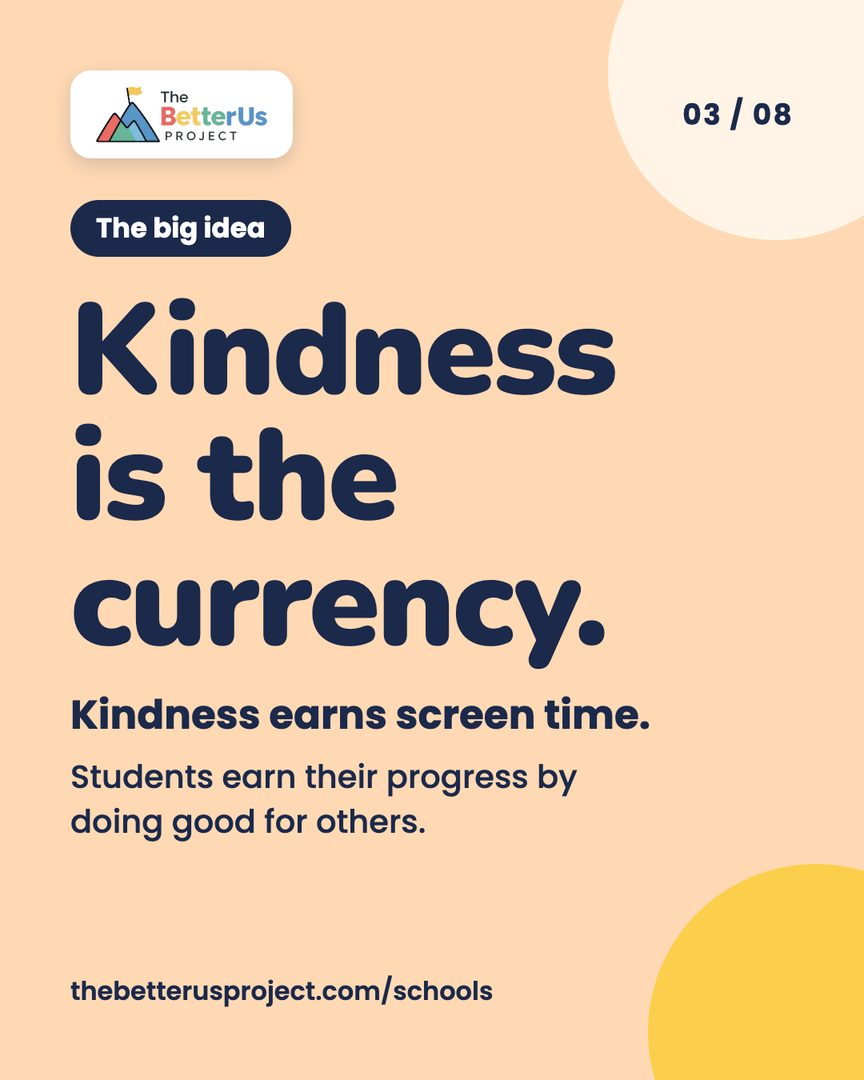
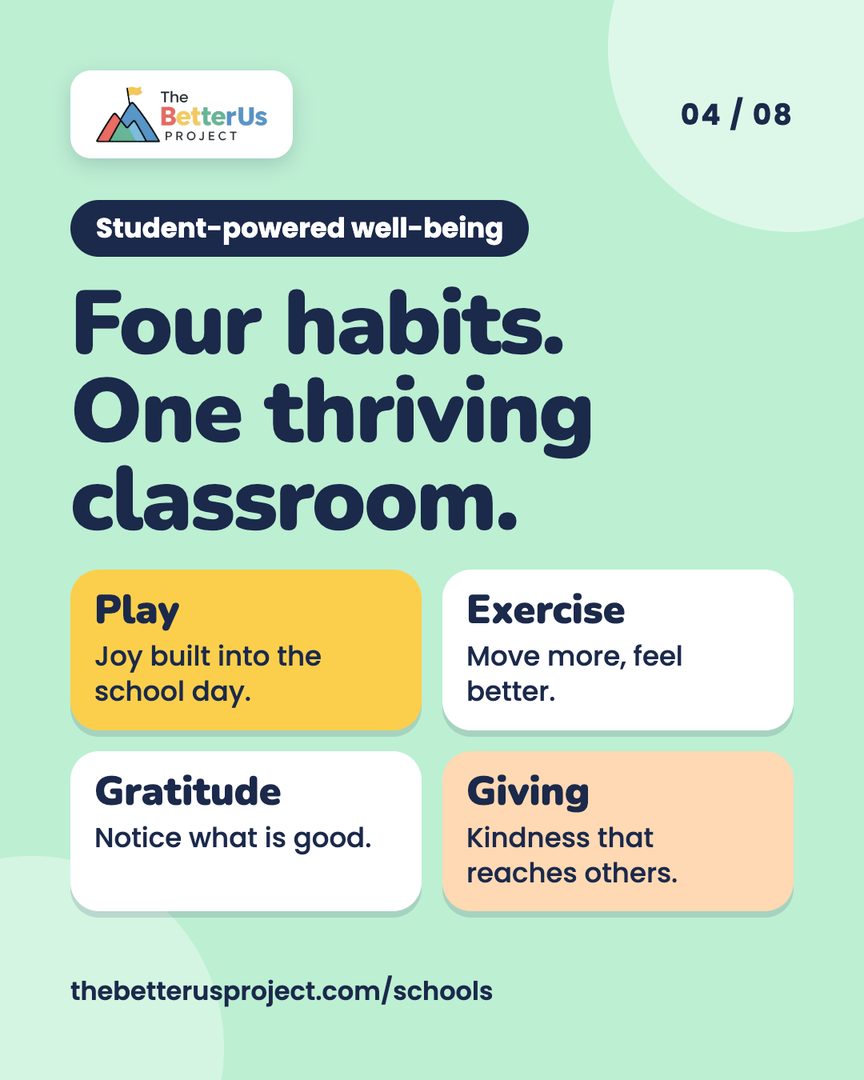
Students earn progress through acts of kindness, empathy and gratitude, alongside play, exercise and giving. Kindness even earns screen time. Every day, each student checks in on how they are really going, and in doing so tells their teachers what no survey ever could.
It takes about 30 seconds. And there are zero spreadsheets for teachers. Ever. We've been the teachers drowning in admin. We were never going to hand you one more thing to run.
See it for yourself
Words only go so far. Watch it in action, and see what happens when students are handed the keys to their own wellbeing.
From one school to 61
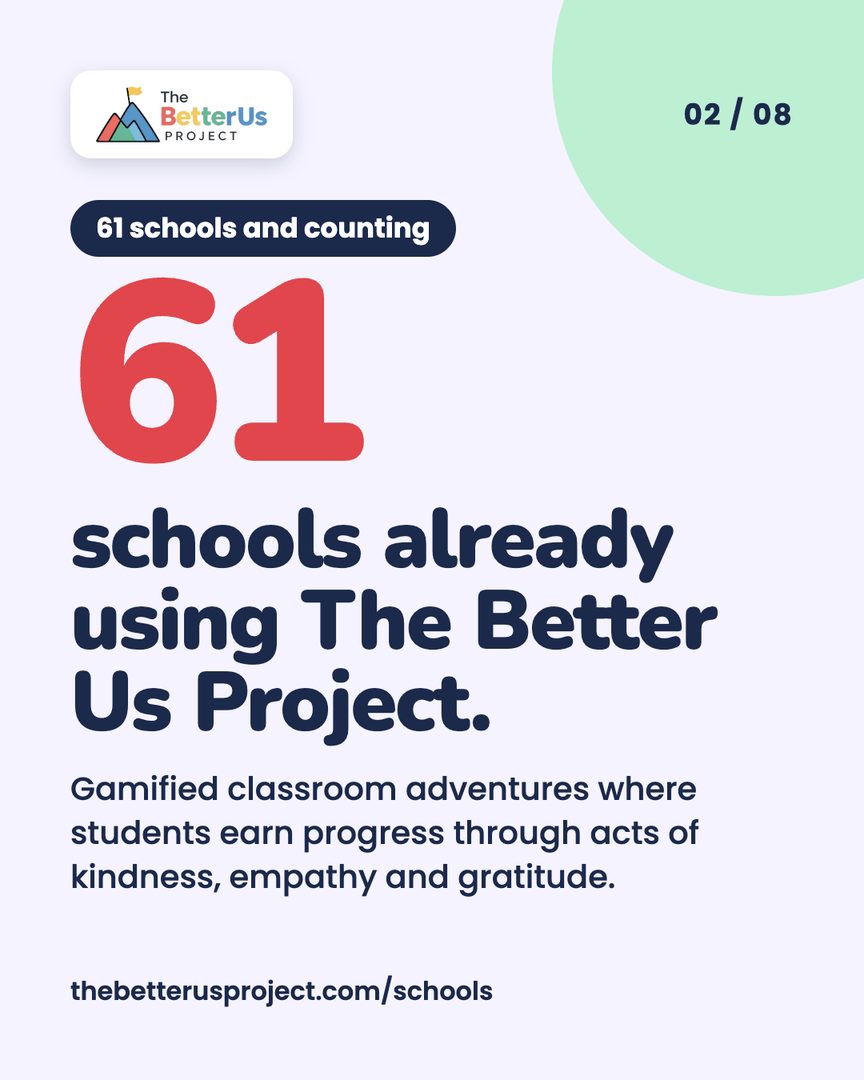
We launched at the start of this year. Since then, The Better Us Project has grown to 61 schools across the country and around the world.
And honestly? What we're seeing has moved us more than anything in our careers. It's changing the way schools connect. It's giving the quietest kids in the room a voice. It's helping students who might once have slipped through the cracks get noticed, early, on an ordinary Tuesday morning instead of after a phone call.
We don't say this lightly. We truly believe it is helping save lives.
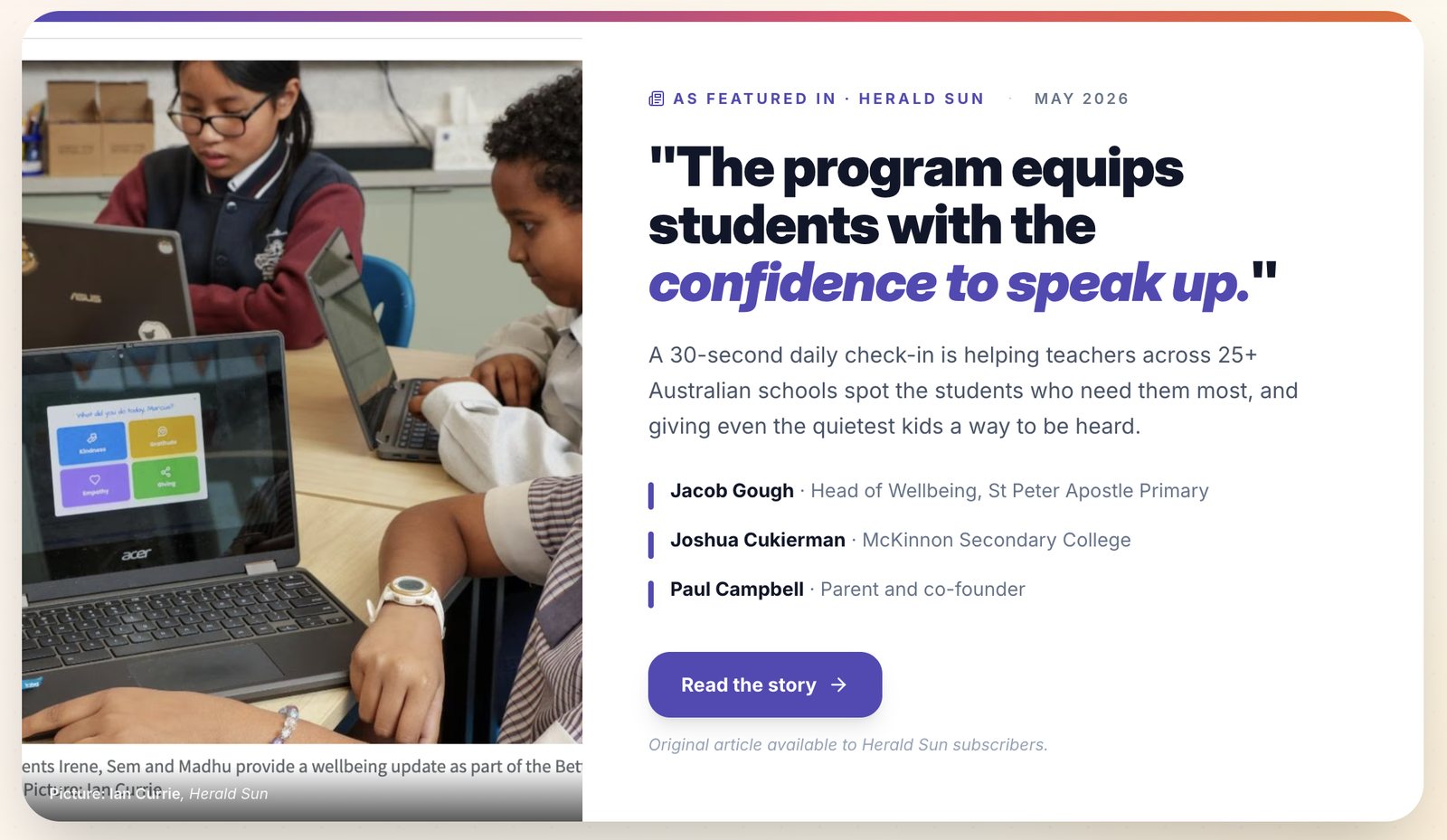
We weren't the only ones who noticed. In May, the Herald Sun told the story, speaking with the educators running the program in their schools.
Better me. Better us.
It starts with one student deciding to become a better me.
When enough of us do that, a classroom becomes a better us. Then a school. Then a whole community.
Everybody, better together.
Our invitation to you: Term 4 is on us
Which brings us to why we wrote this.
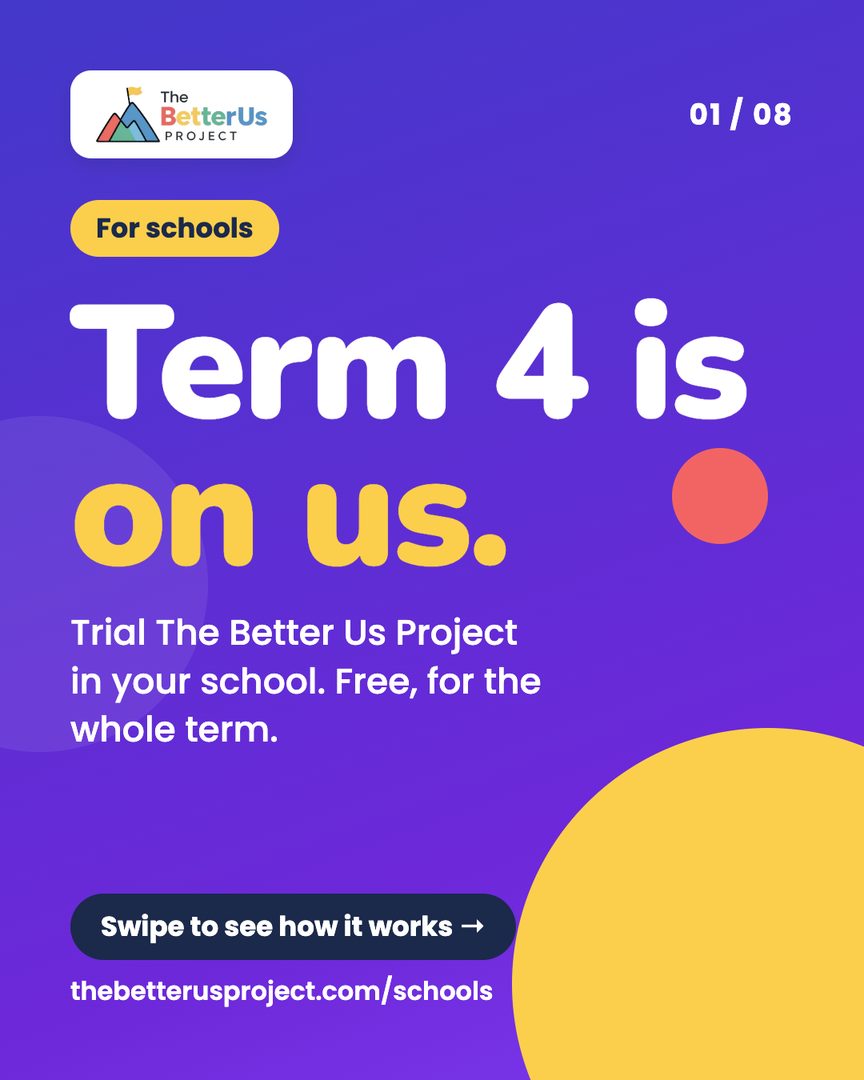
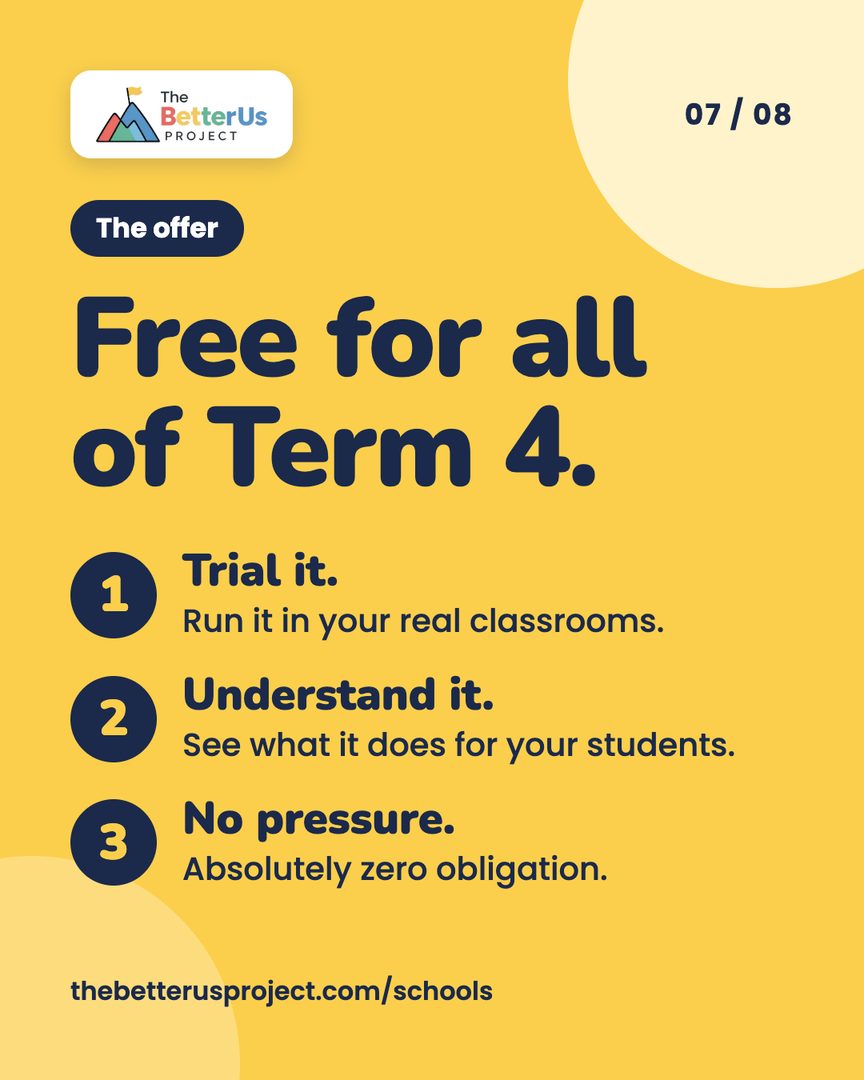
Any school that would like to trial The Better Us Project can have it free for the whole of Term 4. No pressure. No obligation. Test it, trial it, and see how it works with your students and your teachers. We've seen the impact firsthand, and we would love you to see it too.
If it's right for your school, we'll be opening the program to many more schools in 2027. This term is your chance to be part of the story first.
Start your free Term 4 trialBecause the next time a child in your school is quietly struggling, we don't want you to find out from the phone. We want you to already know. And we want that child to already have the tools, the voice and the kindness around them to take the first step themselves.
We'd love to have you with us.
Dale and Paul, The School of Play & The Better Us Project
Branded PDF: We Measure Everything in Schools. Except the Thing That Matters Most.
A printable 2-page summary with the key takeaways. Perfect for staffroom walls, fridge doors, or the back of a planner.
What 600 Schools in 25 Countries Taught Me About Student Wellbeing
Ten years. Six hundred schools. Twenty-five countries. Every single one cared deeply about wellbeing, and every single one was getting it wrong the same way. Here is the crack I kept seeing, and the data that finally proved the fix.
Why play belongs in every wellbeing strategy
After two decades in schools and twenty more research papers, the answer is clear, but the way we deliver it has to change. Here's why play is no longer optional.
Brain breaks that actually reset a classroom
Why most brain breaks fail (you're not being weird enough) and the four formats that work in any year level.